The Sunk Cost Trap: Why You Keep Paying for Things You Don't Use
You already paid for it. So you keep it. That's not logic. That's the sunk cost trap.

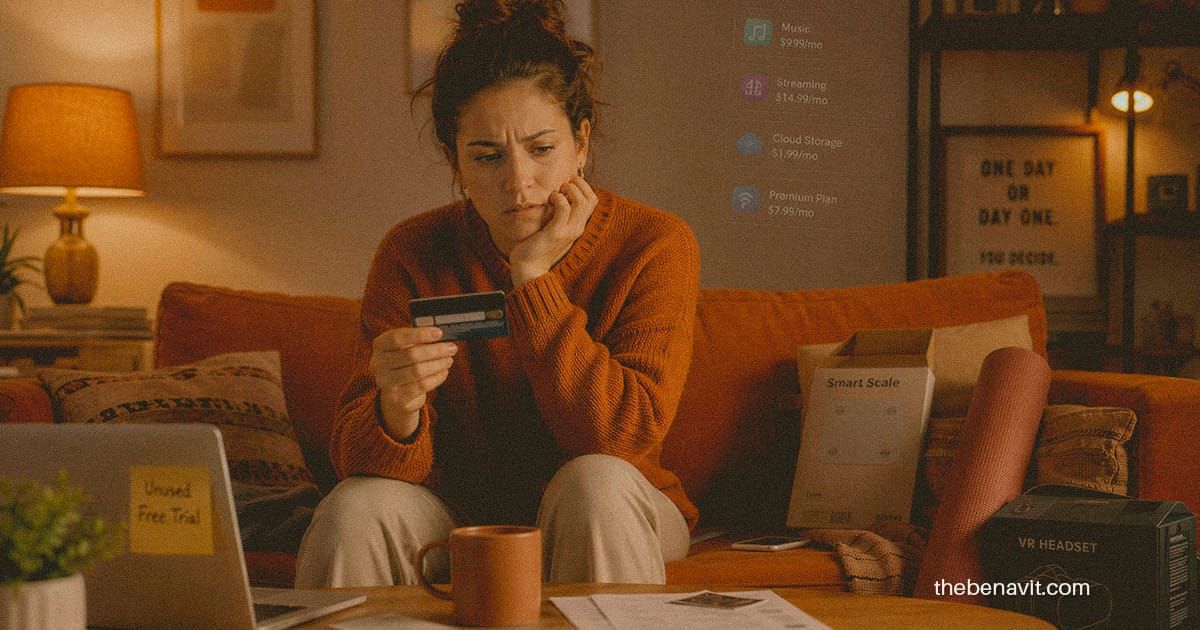
You have a gym membership you haven't used in four months. You have a streaming service you open maybe twice a year. You have an online course sitting untouched in a tab you've kept open since January.
And you're keeping all of it.
Not because you're going to use it. Because you already paid for it.
That's the sunk cost trap. And it's one of the most expensive thinking errors most people never notice they're making.
What a sunk cost actually is
A sunk cost is any money, time, or effort you've already spent that you can't get back. The trip you already booked. The course you already bought. The subscription that renewed last week.
The rational thing to do with a sunk cost is ignore it. The past payment is gone regardless of what you decide next. The only thing that should matter is whether continuing makes sense right now, based on what it costs and what you actually get from it.
That's the theory. In practice, the brain doesn't work that way.
Researchers Hal Arkes and Catherine Blumer demonstrated this in a now-classic study. Participants were asked to imagine they had accidentally booked two ski trips for the same weekend: one they paid more for, one they'd actually enjoy more. The majority chose the more expensive trip even after being told they'd have a better time at the cheaper one.
They weren't choosing what they wanted. They were choosing what they'd paid more for.
Why the brain refuses to let go
The sunk cost fallacy comes down to something called waste aversion. Abandoning something you've paid for feels like confirming that the money was wasted. Continuing feels like preserving the possibility that it wasn't.
Loss aversion compounds this. The brain registers losses more intensely than equivalent gains. Stopping a gym membership you've barely used doesn't just feel neutral, it feels like losing the money all over again. Keeping it feels like keeping the option open, even when that option goes unused month after month.
There's also a self-justification layer. Admitting that a purchase was a mistake means admitting you made a bad call. That's uncomfortable. Continuing the subscription lets you avoid the admission, at least for another billing cycle.
Where this shows up most
The sunk cost trap is everywhere once you start looking for it.
Subscriptions. The average person underestimates how many recurring charges they have by a significant margin. Streaming platforms, apps, newsletters, software tools. Each one felt worth it when you signed up. Most of them quietly renew without a second look.
Courses and digital products. You bought it because you intended to use it. Canceling the access feels like closing the door on that version of yourself who was going to learn that skill. So you keep it. The course stays unwatched.
Gym memberships. The most discussed example for a reason. Research consistently shows that people who pay monthly gym fees attend less frequently than those who pay per visit. The monthly fee removes the per-visit decision, which removes the friction that creates follow-through.
Clothes and objects. You don't wear it, but it cost too much to donate. It sits in your closet as a monument to a purchase you can't quite let go of.
Relationships and commitments. Sunk cost thinking applies well beyond money. Staying in a job, a friendship, or a habit because of how long you've been in it, not because of where it's going, follows the same psychological pattern.
The question that cuts through it
There's one reframe that tends to work better than trying to think your way out of the bias.
Ask yourself: if I didn't already have this, would I pay for it today?
Not "was it worth buying?" That question pulls you backward into justifying the past. The forward-looking version, would you choose this right now if you were starting fresh, tells you whether it has current value.
If the answer is no, the subscription, the course, the membership, the commitment, is being held together by past spending rather than present usefulness. That's the trap in plain view.
Canceling something you don't use isn't losing money. The money is already gone. Canceling is just stopping the loss from continuing.
A practical starting point
Go through your bank statement for the last two months. List every recurring charge. For each one, ask the question above.
Not "do I intend to use this?" Intentions are how subscriptions stay alive forever. Ask whether you would buy it again today, right now, knowing what you know about how you actually use it.
Some of them will obviously stay. Others will be harder to let go of precisely because you've been paying for them so long. That difficulty is the sunk cost fallacy working in real time. Notice it, then cancel anyway.
The goal isn't to feel good about past decisions. It's to make better ones going forward.

Questions about the sunk cost trap
What is the sunk cost fallacy?
The sunk cost fallacy is the tendency to continue investing in something, whether money, time, or effort, because of what you've already spent, even when stopping would be the better choice. Past costs are irretrievable and shouldn't influence current decisions, but they often do.
Why do people fall for the sunk cost trap?
Mainly because of waste aversion and loss aversion. Stopping something you've paid for feels like admitting the money was wasted. Continuing feels like keeping the possibility alive that it wasn't. The brain prioritizes avoiding that feeling of loss over making the objectively better decision.
What are common examples of the sunk cost fallacy?
Gym memberships you don't use, streaming services you barely open, online courses you bought but never finished, clothes you keep because they were expensive, and commitments you maintain because of how long you've been in them rather than where they're going.
How do I stop falling for the sunk cost fallacy?
The most useful question is: if I didn't already have this, would I pay for it today? That reframes the decision around current value instead of past spending. If the honest answer is no, you're holding on because of what you paid, not because of what it's worth to you now.
Is the sunk cost fallacy only about money?
No. It applies to time and effort too, and extends into relationships, jobs, habits, and long-term commitments. Any situation where you stay in something primarily because of what you've already put in, rather than what you're getting out of it, follows the same pattern.